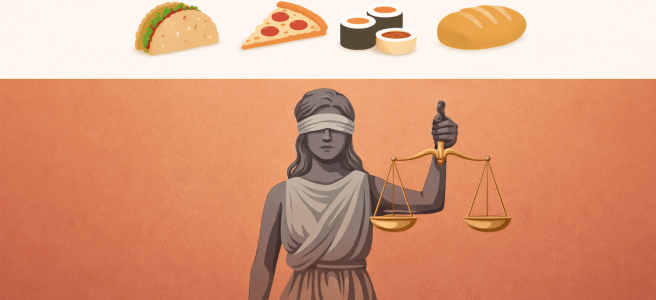
There is a quiet assumption that sits underneath many modern conversations. It rarely gets stated directly, but it shapes how people think about society, politics, and even everyday life. The assumption is that multiculturalism is obviously good. When people explain why, they almost always point to the same things. Food from different countries. Cultural festivals. Clothing and traditions. The conclusion seems obvious. Look at all the variety. Look how much richer life becomes.
But something about that explanation does not quite hold together. It feels incomplete. Not because diversity does not exist, but because the argument is built on a confusion. We are not actually talking about culture. We are talking about customs. When those two are treated as the same thing, we lose the ability to understand how systems hold together or fall apart.
Culture is not the surface level expression of life. It is not the food people eat or the holidays they celebrate. Culture is what gives those things meaning. It answers deeper questions. What is good. What is right. What do I owe others. Who has authority. Culture operates at the level of judgment. It is the highest layer in a system because it determines how everything else is ordered.
Customs are different. Customs are how culture becomes visible. They are the repeated actions that express a deeper order. Meals, celebrations, habits, and traditions all fall into this category. They can be shared, adopted, or modified without changing the structure of a system. That is why people experience customs directly and often mistake them for culture itself.
We live in a time obsessed with what can be measured. But culture does not operate at that level. It cannot be reduced to metrics or surface expressions. As I argue in Striving for Quality, quality itself cannot be measured directly. It must be judged. Culture operates in that same domain. It is not counted. It is recognized.
Once this distinction is clear, the common argument for multiculturalism starts to shift. When people say that many cultures are living together successfully, what they are often observing is many customs existing side by side. They see different foods and traditions and conclude that different cultures are blending. But what is actually happening is more subtle. Those customs are existing within a system that is still ordered by a shared culture. That shared culture is doing the real work, even if it is no longer acknowledged.
Every functioning system has a top level. At that level, something determines how conflicts are resolved, what counts as justice, and what responsibilities people carry. That is culture. It is the highest provider of meaning in the system. A place can contain many peoples, and even many distinct ways of life, but a system cannot be governed by many cultures at once. If multiple cultures attempt to operate at that highest level, the system no longer has a clear way to resolve differences. It shifts from integration to competition.
This becomes easier to see when we look at how systems fail. The Late Roman Empire provides a clear example. At its height, Rome was capable of incorporating many different peoples. It allowed local customs, languages, and traditions to continue. In that sense, it was highly diverse. But it remained stable because there was still a shared Roman order at the top. Law, authority, and civic responsibility were defined by that culture, and the parts of the system aligned with it.
Over time, that alignment weakened. Different groups within the empire began to operate with their own loyalties, their own internal authority structures, and their own understanding of responsibility. Military power became tied to groups that were not fully integrated into the Roman system. The shared cultural framework that once ordered the empire was no longer consistently applied or reinforced. Rome did not collapse simply because it contained many peoples. It collapsed because it could no longer maintain a unified culture at the level that governed them.
This pattern is not unique to Rome. It reflects a more general truth about how systems operate. In any complex system, parts do not integrate simply by existing next to each other. They integrate when they are properly ordered. Lower levels must align with higher ones. Meaning must flow from the top down. When that ordering holds, new qualities emerge. When it breaks, the system does not remain stable. It begins to come apart.
This is the central claim I develop in Striving for Quality. Integration is how parts are ordered toward wholes, how responsibility flows, and how new quality emerges. Disintegration is not a competing good. It is the loss of order, coherence, and life. Multiculturalism, when it operates at the level of customs, does not threaten this ordering. But when it moves to the level of culture, where meaning and authority are defined, it challenges the very structure that makes integration possible.
A system holds together when responsibilities are properly ordered and meaning flows from the top down. Lower levels must align with higher ones for integration to occur. When multiple cultures claim authority at the top level, that alignment breaks. Meaning becomes contested. Responsibility becomes fragmented. The system can continue for a time, but it becomes increasingly dependent on enforcement rather than shared understanding. Enforcement can control behavior for a while, but it cannot replace culture.
The root issue is not diversity. It is confusion. When customs are mistaken for culture, we believe we are integrating something deeper than we actually are. We celebrate visible differences while ignoring the underlying structure that makes cooperation possible. Over time, that structure weakens because it is no longer recognized or reinforced.
A society can welcome many peoples and preserve many traditions. It can allow a wide range of customs to flourish. But it cannot function without a shared culture that orders those customs into a coherent whole. This is not simply a political claim. It is a reflection of how systems operate. Integration requires a common understanding of what is good, what is just, and what people owe one another.
Integration occurs when parts are properly ordered. Disintegration occurs when they are not.
And drift, left alone, always resolves in one direction. Toward disintegration.

 LongLoft - Code Writer